What is the most common mistake drivers make
Starting your driving journey is one of the most exciting milestones you will experience. The freedom of being behind the wheel, the independence of moving around on your own terms, and the confidence that comes with mastering a new skill it is a genuinely rewarding feeling that stays with you for life. For many learners in Palakkad, the first few sessions behind the wheel are filled with equal parts excitement and nervousness, and that is completely normal. However, the early stages of learning also come with a set of common mistakes that nearly every beginner makes. Some are minor and easily corrected with practice, while others, if left unchecked, can quietly develop into dangerous habits that affect your safety and confidence on the road for years to come. The challenge is that most beginners do not even realise they are making these mistakes because without proper professional guidance, there is no one to identify and correct them in real time.
At New Master Driving School in Palakkad, our government-certified instructors have worked with hundreds of learners across all age groups and experience levels. Over the years, they have identified the most common mistakes new drivers make, understood exactly why these mistakes happen, and developed proven methods to correct them early before they become ingrained habits. Whether you are just starting out or a few sessions in, recognising these mistakes gives you a significant advantage on your learning journey. Here is what they are, why they happen, and most importantly, how you can avoid them from day one.
1: Holding the Steering Wheel Too Tight
Many new drivers grip the steering wheel as if their lives depend on it white knuckles, rigid arms, tense shoulders. This is one of the most common mistakes beginners make, driven by anxiety and the fear of losing control.The problem with a death grip on the wheel is that it actually reduces your ability to steer smoothly and react quickly. Tension in your arms travels up to your shoulders and affects your entire posture, making it harder to turn comfortably or absorb road feedback.
How to avoid it: Hold the steering wheel firmly but relaxed, with your hands positioned at the 9 o’clock and 3 o’clock positions. Keep your elbows slightly bent. As you build confidence through practice sessions, your grip will naturally become more relaxed and controlled. Our instructors at New Master Motor Driving School specifically guide learners through this in the early sessions to set the right foundation.
2: Dual Control Vehicles for Maximum Safety
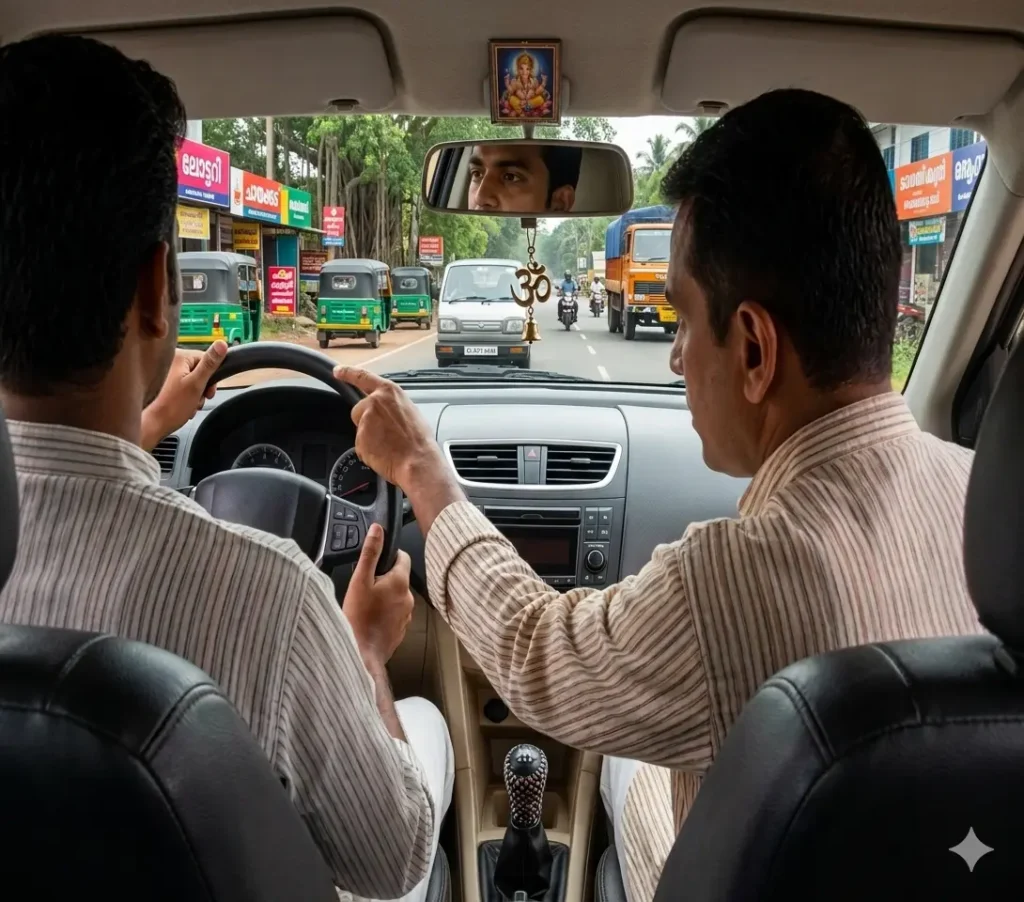
Professional driving schools use dual-control vehicles cars equipped with a secondary brake and clutch pedal on the instructor’s side. This feature is a game-changer for beginner learners. When you are learning to drive, moments of uncertainty or sudden mistakes can happen without warning. In a dual-control vehicle, the instructor can instantly intervene and prevent a potential accident. This makes learning significantly safer for both the student and other road users.
At New Master Driving School, we conduct all our driving lessons in dual-control vehicles, ensuring a safe training environment that builds your confidence without unnecessary risk. You are free to focus on learning because you know a professional is ready to assist if needed.
3: Incorrect Use of Brakes
Sudden, hard braking is one of the clearest signs of an inexperienced driver. New drivers often brake too late and too sharply, which creates discomfort for passengers, increases stopping distances in wet conditions, and can cause loss of vehicle control. On the other end of the spectrum, some new drivers ride the brakes unnecessarily keeping their foot on the brake pedal even when not actively slowing down which causes premature brake wear and confuses following drivers.
How to avoid it: Anticipate stops well in advance and apply gradual, progressive braking rather than sudden hard stops. Keep your foot off the brake pedal when not actively slowing down. Good observation and forward planning are the keys to smooth braking, and these are skills developed through structured driving practice under an experienced instructor.
4: Poor Judgment of Space and Distance
Judging how much space your vehicle occupies and how much distance you need from other vehicles is a skill that takes time to develop. New drivers frequently misjudge the width of their car, which leads to nervousness around narrow roads, incorrect positioning on the lane, and difficulty with parking and reversing. Similarly, maintaining safe following distance the space between your vehicle and the one ahead is something many beginners struggle with initially.
How to avoid it: Drive in a variety of road conditions during training, including narrow lanes, parking areas, and multi-lane roads. Our instructors at New Master Driving School use specific exercises to help students develop accurate spatial awareness early in the training programme. With time and guided practice, judging space and distance becomes intuitive.
5: Forgetting Indicators and Signals
Failing to use indicators is one of the most common and most dangerous habits among new drivers in Palakkad. Indicators communicate your intentions to other road users, giving them time to react and adjust. Skipping this step increases the risk of accidents significantly. New drivers often forget indicators when they are focused on managing gears, mirrors, and steering simultaneously. This is completely normal in the early stages but must be consciously corrected.
How to avoid it: Make using the indicator a non-negotiable part of every turn and lane change, regardless of traffic conditions. At New Master Driving School, our instructors emphasise indicator usage from the very first lesson and correct any lapses immediately to prevent this habit from developing.
6: Overconfidence After Initial Progress
Progress in driving can feel rapid in the early stages. Many students master basic vehicle control within the first few lessons and begin to feel overly confident, assuming they are ready for independent driving before they truly are. Overconfidence leads to reduced attention, risk-taking behaviour, and inadequate preparation for complex traffic situations. Road accidents among newly licensed drivers are disproportionately high, and this is a major contributing factor.
How to avoid it: Embrace the full training curriculum even when you feel comfortable with the basics. The later stages of training defensive driving, hazard awareness, RTO test simulation are where truly safe driving skills are built. Complete the course, respect the process, and build confidence gradually with verified competence at each stage.
7: Neglecting Gear and Clutch Coordination
For manual vehicle learners, gear and clutch coordination is one of the most technically demanding aspects of early driving. Incorrect clutch engagement leads to stalling, jerky acceleration, and excessive wear on the vehicle’s transmission system. New drivers often release the clutch too quickly or press the accelerator without coordinating the clutch release, resulting in stalling especially on slopes.
How to avoid it: Practise gear transitions slowly and deliberately in a low-traffic environment before attempting busier roads. Our instructors break down clutch and gear coordination into clear, step-by-step stages that students can master progressively. Slope starts are also specifically practised to build the coordination needed for real-world driving in Palakkad’s terrain.
How Professional Training Addresses These Mistakes
Every mistake mentioned in this guide is normal for a beginner. The difference between a competent driver and an unsafe one is not talent it is quality of training and correction. At New Master Driving School in Palakkad, our certified instructors are trained to identify these mistakes early and correct them before they become habits. Our structured curriculum ensures that every student develops the complete skill set required to drive safely and confidently on Palakkad’s roads and beyond.
From your very first session to your final RTO test preparation, we are with you every step of the way. Contact us today to enrol and start building the right driving habits from day one.